
The Best Things In Life Don't Scale
I came across this story on Facebook, reposted by Hassan Ibrahim, a friend and colleague from the University of Minnesota:
I know the exact pressure it takes to crack a rib during CPR. But last Tuesday, I learned a patient’s silence can break a doctor’s soul. His name was David Chen, but on my screen, he was "Male, 82, Congestive Heart Failure, Room 402." I spent seven minutes with him that morning. Seven minutes to check his vitals, listen to the fluid in his lungs, adjust his diuretics, and type 24 required data points into his Electronic Health Record. He tried to tell me something, gesturing toward a faded photo on his nightstand. I nodded, said "we'll talk later," and moved on. There was no billing code for "talk later."
Mr. Chen died that afternoon. As a nurse quietly cleared his belongings, she handed me the photo. It was him as a young man, beaming, his arm around a woman, standing before a small grocery store with "CHEN'S MARKET" painted on the window.
The realization hit me like a physical blow.
I knew his ejection fraction and his creatinine levels. I knew his insurance provider and his allergy to penicillin. But I didn't know his wife's name or that he had built a life from nothing with his own two hands. I hadn’t treated David Chen. I had managed the decline of a failing organ system. And in the sterile efficiency of it all, I had lost a piece of myself.
The next day, I bought a small, black Moleskine notebook. It felt like an act of rebellion.My first patient was Eleanor Gable, a frail woman lost in a sea of white bedsheets, diagnosed with pneumonia. I did my exam, updated her chart, and just as I was about to leave, I paused. I turned back from the door."Mrs. Gable," I said, my voice feeling strange. "Tell me one thing about yourself that’s not in this file."
Her tired eyes widened in surprise. A faint smile touched her lips. "I was a second-grade teacher," she whispered. "The best sound in the world... is the silence that comes just after a child finally reads a sentence on their own."I wrote it down in my notebook. Eleanor Gable: Taught children how to read.I kept doing it. My little black book began to fill with ghosts of lives lived.
Frank Miller: Drove a yellow cab in New York for 40 years.
Maria Flores: Her mole recipe won the state fair in Texas, three years running.
Sam Jones: Proposed to his wife on the Kiss Cam at a Dodgers game.
Something began to change. The burnout, that heavy, gray cloak I’d been wearing for years, started to feel a little lighter. Before entering a room, I’d glance at my notebook. I wasn’t walking in to see the "acute pancreatitis in 207." I was walking in to see Frank, who probably had a million stories about the city. My patients felt it too. They'd sit up a little straighter. A light would flicker back in their eyes.
They felt seen.
The real test came with Leo. He was 22, angry, and refusing dialysis for a condition he’d brought on himself. He was a "difficult patient," a label that in hospital-speak means "we've given up." The team was frustrated.I walked into his room and sat down, leaving my tablet outside. We sat in silence for a full minute. I didn't look at his monitors. I looked at the intricate drawings covering his arms.
"Who's your artist?" I asked.
He scoffed. "Did 'em myself."
"They're good," I said. "This one... it looks like a blueprint."
For the first time, his gaze lost its hard edge. "Wanted to be an architect," he muttered, "before... all this."
We talked for twenty minutes about buildings, about lines, about creating something permanent. We didn't mention his kidneys once. When I stood up to leave, he said, so quietly I almost missed it, "Okay. We can try the dialysis tomorrow."
Later that night, I opened my Moleskine. I wrote: Leo Vance: Designs cities on paper. The system I work in is designed to document disease with thousands of data points. It logs every cough, every pill, every lab value. It tells the story of how a body breaks down. My little black book tells a different story. It tells the story of why a life mattered. We are taught to practice medicine with data, but we heal with humanity. And in a world drowning in information, a single sentence that says, "I see you," isn't just a kind gesture.It’s the most powerful medicine we have.
The story reminds me of what Captain Mike Abrashoff said after taking control of his first Navy command as captain of the USS Benfold. He spent weeks interviewing each and every one of his 310 sailors. Here is a paragraph from the book:
I started with very basic questions: their names; where they were from; their marital status. Did they have children? If so, what were their names? (In time, I came to know not only my crew’s names, but those of their spouses as well.) Then I asked about Benfold: What did they like most? Least? What would they change if they could? I tried to establish a personal relationship with each crew member. I wanted to link our goals, so that they would see my priority of improving Benfold as an opportunity for them to apply their talents and give their jobs a real purpose. My interviews included more detailed questions: Did they have special memories from high school? How about from their hometowns? I asked if they had goals for their time in the Navy; what about for the future? I always asked them why they had joined the Navy. Until this point, I never knew why people signed up. I learned by listening that 50 percent enlisted because their families could not afford to send them to college, and 30 percent joined to get away from bad situations at home—drugs, gangs, and other violence, for example. Some of their stories broke my heart.
After finishing all of the interviews Abrashoff said:
"Something happened in me as a result of those interviews. I came to respect my crew enormously. No longer were they nameless bodies at which I barked orders. I realized that they were just like me: They had hopes, dreams, loved ones, and they wanted to believe that what they were doing was important. And they wanted to be treated with respect."
The story also reminds me of a man I met on the streets of West Hills, Los Angeles.
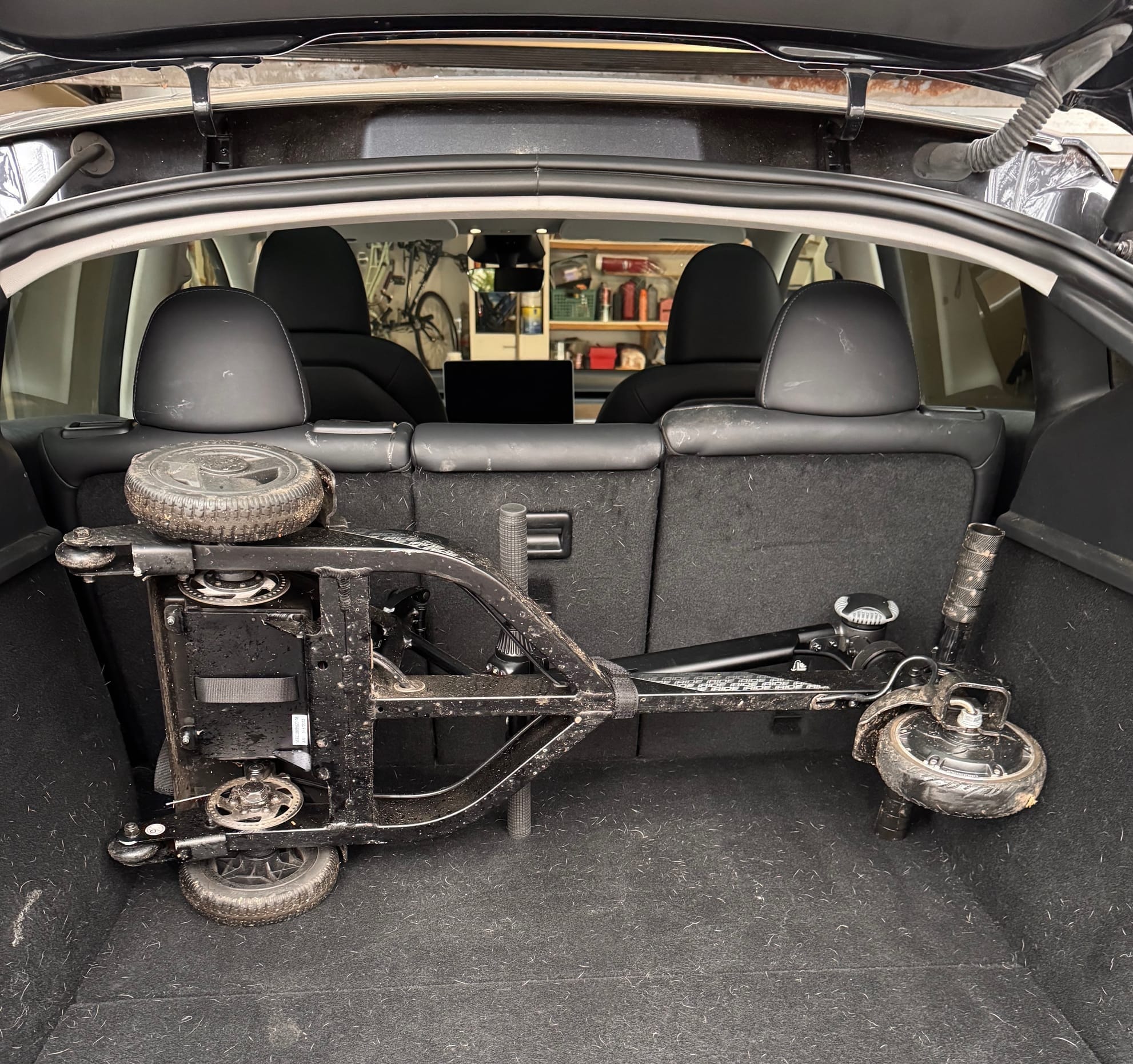
After knee surgery two years ago (man, time passes so quickly 😵💫), I bought an electric buggy so I could take Juno, our Italian Mastiff, for walks. The buggy tops out at 5.5 mph — a solid trot for a big dog. I'd cruise the sidewalks with Juno on leash, periodically doling out freeze-dried liver treats to keep her dopamine juices flowing.
We packed the Buggy up and brought it to Los Angeles with us.
On one of my afternoon Buggy rides with Juno I looked up and saw a tall older Black man with long yellow-white dreadlocks coming down the sidewalk, trotting at Juno's pace. Bright orange-rimmed sunglasses. Not athletic wear — just regular pants. He was out for a run, but in no hurry. More of a trot like Juno.
I pulled over and stopped to let him pass, and as he trotted by I looked up at him and said, "Hi there, how you doin?" He gave me a big smile and said, "I could complain, but what's the point."
That moment was the start of a little relationship we developed. We started crossing paths more often while I was out on the buggy, and we started to stop briefly to say hello. Turns out his name is Randy, he is in his 70s, and he has an effusive and warm personality. Plus, I respect him a great deal — he's in his 70s and out running (trotting) on a regular basis.
I started to look forward to seeing Randy on my buggy rides. I got curious about Randy's story and the river of his life that delivered him fortuitously to the shore of my life, unbidden. He became a bright spot in my day, a small joyful part of my afternoon.
There's a term for what the doctor did when he turned back from Eleanor Gable's door. What Abrashoff did when he sat down with 310 sailors. What I do when I pull the buggy over to say hello to Randy.
Awakening cues.
I came across this concept in Daniel Coyle's new book Flourish. Awakening cues are "moments of receptive stillness that create meaning by illuminating connection." They happen when we pause, let go of our agenda, and step into the mystery of another person.
The doctor could have kept walking. I could have nodded and kept cruising past Randy. Abrashoff could have relied on org charts and performance reviews.
But something made all of us stop.
And here's the paradox Coyle describes: The more we surrender control, the more fully we connect.
The doctor surrendered his tight schedule of "seven minutes per patient." I surrendered my buggy ride agenda (which was really just "get Juno exercised and get back to work"). Abrashoff surrendered the captain's traditional distance and authority. We surrender the relentless burden of optimization to dip into being human with our fellow humans.
And in those small acts of stopping — opening the door to something we couldn't predict or control — meaning shows up.
Eleanor Gable became a person who taught children to read. Randy became a bright spot in my day. Those 310 sailors became people with hopes, dreams, and stories that broke their captain's heart.
The awakening cue isn't the outcome of the conversation. It's the pause itself. The decision to stop and sense a reverberation. To ask, "What is the world showing me now?"
We live in a world that worships efficiency, data, and forward motion. The hospital's Electronic Health Record demands 24 data points. The Navy has org charts and command structures. My afternoon has a to-do list waiting.
I came across this quote from Ryan Levesque that hit the nail on the head about this stuff:
"The best things in life don't scale."
They require us to stop. To pull over. To turn back from the door. To ask questions.
And to risk the beautiful uncertainty of what might happen next.
