
Your Hidden Legacy
Yesterday, I had the great honor of being able to give a talk to the medical students at the University of Minnesota who are enrolled in a course called "Becoming a Doctor." My talk was called "A Filled Up Life or Fulfilled Life: It's a Choice." The talk, from the feedback, was extremely successful, for which I am incredibly grateful.
But the real juice in this experience for me was coming back full circle to the University of Minnesota, where my whole career and life existed at one time.
In 2012, after a three‑month stint at Hazelden for prescription or narcotic addiction (which many of you already know about), I found myself at home in one of the most profound states of life disorientation I could ever imagine.
Three months before, I'd been ordered to leave work. I went through narcotic withdrawal - one of the most hellish experiences of my life - followed by 3 months of trying to learn a new way of seeing and being in the world during my stay at Hazelden.
When I landed back home, I could still hardly walk because I needed a hip replaced, I was emotionally and physically a wreck, and I was scared to death that my family could fall apart from the mess. There was a job waiting for me, but I had been stripped of my position as program director of the general surgery program and as head of the Division of Thoracic Surgery, a division I had worked twenty years to build.
But it was way more than the loss of the titles and my positions that was so difficult. I genuinely loved working with so many of the great people in the operating rooms, the wards, and my surgical colleagues in the department, so much so that I often thought of them as my second family.
So it was no easy decision to decide to leave my career and become a househusband. It was painful as hell.
I walked outside, called the chair, and told him I had decided not to return. He wished me luck, and we hung up.
I was outside in front of our house when I made the call. When I pushed the red end call button, I stopped dead in my tracks and had to breathe to keep myself from vomiting on the sidewalk. My identity and my other "family" were gone in a flash.
So why am I telling you this story?
Because after that phone call, I no longer existed for the University. I rose from the ashes over time — retooled, learned, started speaking and writing — but the institution had moved on. That's what institutions do. And it taught me the hard truth of impermanence and dealing with the change and loss we all experience in life.
So that is why not only giving a talk to the medical students meant so much, but it meant even more because it landed, which meant it was of such value to them. Which gets me to the real story behind the hidden legacy: the Four Seasons Approach.
During the talk, I told the story of how I transformed my thoracic surgical service into a Four Seasons Hotel-like boutique service well before my world fell apart. Let me explain.
Our family went to Sharm el-Sheikh for a dive vacation in the Red Sea, one of the world's greatest dive sites. We were incredibly fortunate to stay at the Four Seasons, one of the world's greatest luxury hotel chains (they were affordable to us back then!). I was walking along the path to the dock to go scuba diving when I approached another path that intersected with mine, and I spotted an employee walking on that path toward the intersection. I hesitated to let them pass, but he stopped dead in his tracks, gave me a smile radiant with sunshine, and waited for me to pass. The thing about this, compared to other luxury hotels I have stayed in? The smile in other luxury hotels so often feels obsequious. The smiles and everything at the Four Seasons feel authentic.
For whatever reason, this blew my mind so much that I had the idea of figuring out how they did it and applying it to my thoracic surgical service. Why? Because the level of attention to that kind of detail at our hospital (and frankly, most hospitals) is abysmal. And this drove me nuts since we could often get friendlier service at a Starbucks, and that is despite the fact that you are sick or in pain!
So I did the Michael Maddaus thing and actually went to the corporate office in Toronto when I was there for a surgical meeting and tried to pound my way through to talk to someone about how they did it. They, in essence, told me to fuck off as they did not share their secrets with any yahoo off the streets.
But as my wife Lea said, "nothing ever stops you," so I started calling and eventually got a wonderful woman on the phone who was willing to listen to what I wanted to do, and she finally agreed to give me the three principles upon which they operate:
- "Get the Standards Right" - a book of over 350 specific behaviors and ways of dealing with guests, like the experience I had with the intersection.
- "What About Me?" - understand who the guest is, why they are traveling, whether their stay is for work or pleasure, and whether they have any special needs.
- "Wow Me If You Can" - Nuff said.
This was a game-changer for my thoracic surgical service. I constructed four areas to focus on, and here are the processes for each that I created:
- Rounds: We all gathered together outside the patient's door, and instead of everyone filtering in sporadically and chaotically, we entered together in unison with our group energy directed to the patient. One resident or APP would man the computer, get set up with the x-rays and EMR, and then turn their eyes and attention back to the patient. All other residents would stand facing the patient, with all pagers set to vibrate at the start of rounds. No one was allowed to exit the room except in an emergency. I would sit on the edge of the bed next to the patient, and the chief or other resident would give a summary, and then we would give the patient as much time as needed to hear them and answer questions.
- Same setup for clinic. We entered in unison with all pagers on vibrate. I then introduced myself and all the residents and APPs in the room. If family members were present, I would personally go down the line, shake everyone's hand, look them in the eyes, and introduce myself. I sat in the chair in front of the computer and, after setting up the x-rays and EMR, turned my body and eyes to the patient while all other eyes were focused on the patient and the family.
- During the day, when patients had a significant test or investigation, I would have the resident give the patient the preliminary result (unless it would require a major discussion involving me) so they would not sit there wondering and getting anxious.
- I randomly interviewed patients and their family members about how well each resident did in providing service and caring, and gave the residents their feedback.
This Four Seasons program led to massive word of mouth, which facilitated the growth of our clinical practice at a hospital that was shunned by many in the community due to the perception of the hospital having poor service and because of the complexity, frequent lack of coordination, and seamless care at academic hospitals at that time.
Well, after I finished the talk, a massive number of clapping hands, each with the name of the person clapping, floated from top to bottom. The chat filled up with incredible feedback. They want to make it a permanent part of the curriculum. All great stuff.
But for me, personally, the real joy and meaning came from a medical student who stayed on with the course director after all the other students had signed off. Turns out he has just finished his PhD in physiology and is going into vascular surgery, and his mentor is none other than:
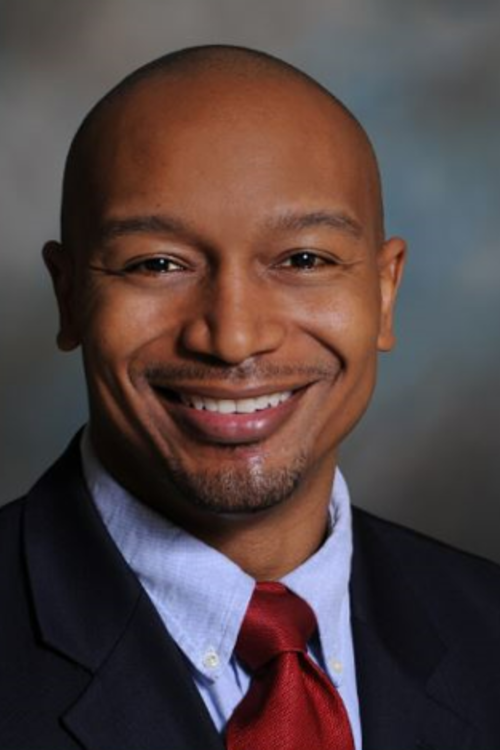
Derrick was a resident in the program when I was the program director, and he is now on faculty at the University. Derrick is a level 10 human being and surgeon. A total class act. And he has a fabulous sense of humor.
The medical student who Derrick is mentoring stayed on Zoom to tell me a story about Derrick that happened when he was on Derrick's service.
Turns out Derrick uses the Four Seasons patient experience approach I cobbled together, and he told the medical student about it and how I sparked its development.
Now that FELT FUCKING FANTASTIC. Twenty years later, and a small slice of what I did and created lives on in the lives of a surgeon and the residents and medical students he encounters, and it benefits the patients and their families.
For me that is better than a plaque or my name on the door of a conference room or a retirement party. It is a hidden legacy.
Twenty years later, Derrick Green is running his service with this approach. Teaching it. Telling residents and students where it came from. And those residents will carry it into their own practices, and their trainees after them.
Turns out there is science behind this hidden legacy stuff.
Nicholas Christakis and James Fowler found that a single act of generosity cascades up to three degrees of separation — reaching people the original actor has never met. Each generous act was ultimately tripled as it rippled outward through the network. In medical education, researchers call this the "hidden curriculum" — the reality that what trainees learn from watching how an attending is with patients is stickier and more durable than anything taught in a lecture hall.
Within any team or organization, this means our behaviors are contagious. They spread from person to person — even to people who never met the one who started it. Up to three degrees of separation and beyond.
The converse is true too: shitty behavior infects others around us, and spreads like an infection.
I didn't know any of that when I was sitting on the edge of a patient's bed or shaking a family member's hand. I wasn't thinking about legacy. I was thinking about doing the work in front of me as well as I possibly could.
And that's the point.
Your hidden legacy isn't something you plan. It's not something you engineer or brand or put your name on. It's the way you show up — day after day, in the small moments no one is tracking — that gets absorbed by the people around you and carried forward into lives you'll never see.
You can't engineer a hidden legacy. But you can choose how you show up — at work, and at home. The legacy will take care of itself.
The ancient Greek statesman Pericles said: "What you leave behind is not what is engraved in stone monuments, but what is woven into the lives of others."
You have a hidden legacy too. What do you think it might be?
